
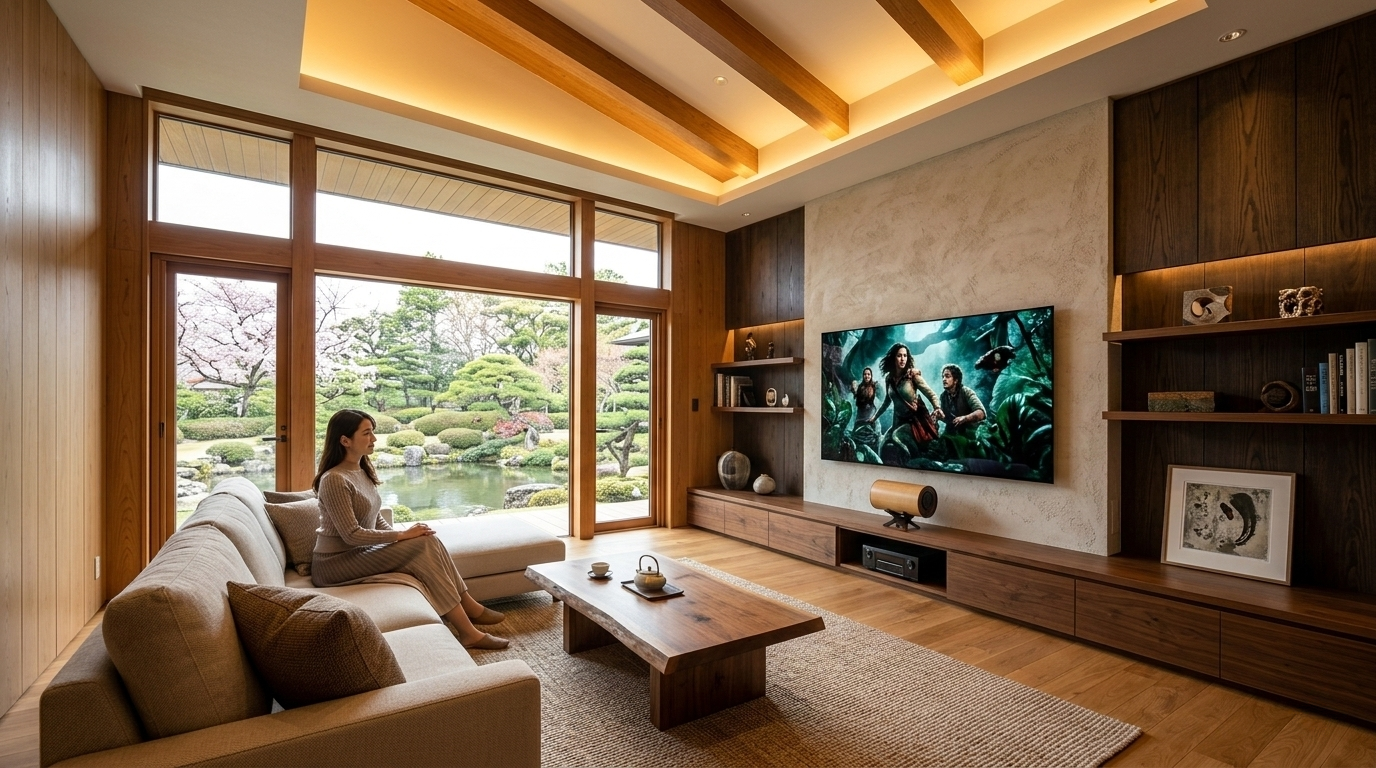
Why do we sometimes feel unsettled even in quiet homes?
──The "Sound Environment" needed for future living spaces
Housing performance continues to improve year after year.
Insulation, airtightness, noise reduction, air quality.
Yet still, some people feel that "even though I'm at home, I don't feel as rested as I expected."
The reason may lie in the way sound exists in our homes—something that has not been sufficiently articulated in residential design until now.
Today, we would like to consider the perspective of "Sound Environment" that is necessary for future living spaces.
Why do we sometimes feel unsettled even in quiet homes?
The comfort of our homes has evolved significantly in recent years.
Insulation performance, airtightness performance, noise reduction, air quality. The basic performance requirements for housing have reached levels incomparably higher than before.
Yet still, we often encounter voices like these:
"It's supposed to be a quiet house, but somehow I don't feel settled"
"Even when I come home, I don't feel as refreshed as I expected"
"I'm sleeping, but I don't feel fully recovered"
We believe this sensation is not merely imagination.
And we think that behind this lies the way sound exists in our homes—something that has not been adequately addressed in residential design until now.
"Being quiet" and "feeling secure" are not the same thing
Until now, the Sound Environment of homes has mainly been discussed in terms of "whether it's noisy or not."
Of course, noise control is important. However, in reality, even in spaces with low volume levels that are sufficiently quiet, the body may not completely relax.
Modern homes contain:
Air conditioning airflow sounds
Ventilation equipment operation sounds
Appliance operating sounds
Distant sounds reaching from outside
Sounds that reflect and linger indoors
None of these are loud sounds.
However, in most cases, they arrive persistently from specific directions.
The human brain unconsciously continues to track the location of these sounds.
This is originally a mechanism for detecting danger.
As a result, even though it may be superficially quiet, the body may continue to maintain slight tension.
Homes should be spaces for recovery
We believe that homes should not merely be places where we live, but places where we recover.
When bodies that have become tense from work, travel, information, and human relationships naturally relax upon returning home.
Only then can we say that a home is fulfilling its true role.
In this sense, what's important is not "quietness" itself, but an environment where the body can feel that it's safe to be at ease.
And this sense of security is deeply connected to the way sound exists.
Spaces where we can breathe deeply naturally have sound conditions
When we are in forests or by the sea, our breathing naturally becomes deeper without conscious effort.
This is not only due to visual beauty.
It's because the sounds there don't assert themselves strongly from specific directions, but naturally spread throughout the entire space, existing as the environment itself.
In such spaces, the brain no longer needs to continuously track sound sources, and the body can more easily feel secure.
It is possible to create such conditions within our homes as well.
This means that from now on, we need a perspective that goes beyond just "blocking" or "reducing" sound to consider how sound should exist within a space.
Thinking of sound as "environment" rather than "equipment"
We at M's system have delivered sound through our speaker products until now.
However, what we are now working toward is not just about products.
It's about reconsidering sound as an environmental element that determines the quality of living spaces, just like light and air.
Not by increasing volume or adding effects, but by arranging sound within a space in a way that allows people to breathe naturally.
We believe this is where the new possibilities for future home design lie.
Toward future living space value
Now that housing performance has improved, what will be questioned going forward is not just "how high-performance it is," but the experiential value of how people feel and how they can recover in that space.
The moment you enter your home, your shoulders relax a little. You can breathe deeply unconsciously. You can rest quietly.
Such homes will surely be increasingly sought after.
We want to continue making proposals that support this value from the perspective of Sound Environment.
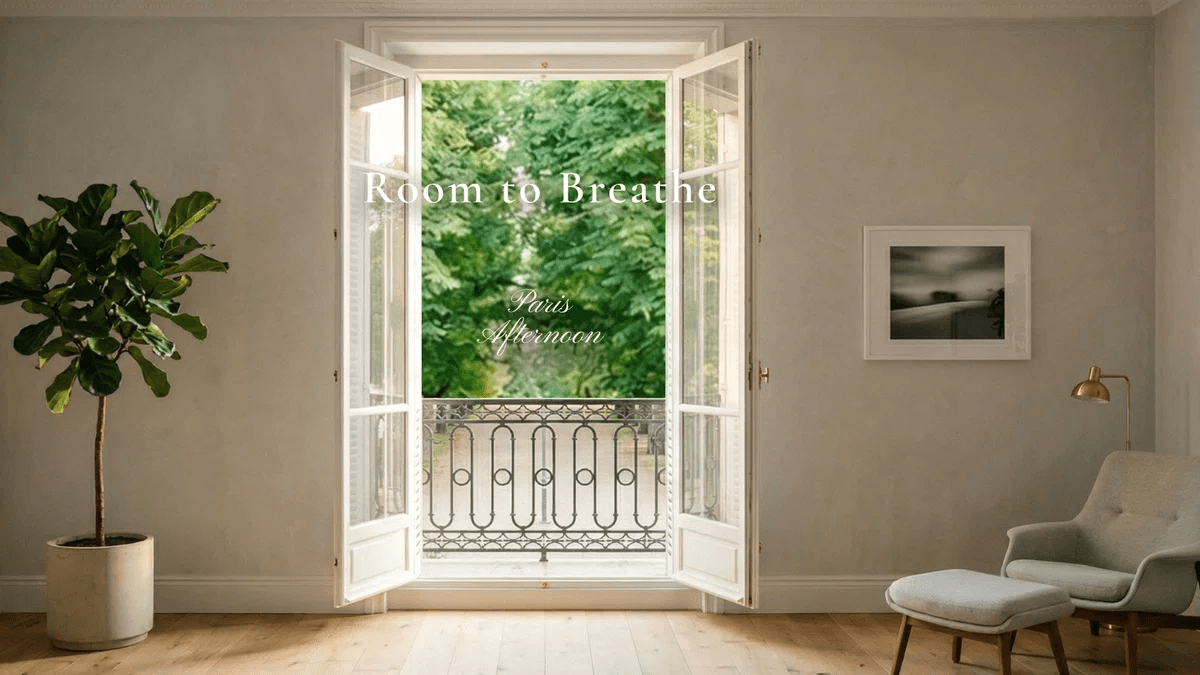
More from our Blog
You may also be interested in
Latest in "CEO Blog"
Quiet Luxuryと
Quiet Luxuryとは何か Quiet Luxury(クワイエット・ラグジュアリー)とは、「見せびらかす豊かさ」から「感じ取る豊かさ」への転換を象徴する…
細胞は
細胞はどこで音を受け取っているのか――細胞膜・接着部位・細胞骨格という“入り口”について前回は、細胞がただ音に反応しているだけでなく、周波数や音圧、波のかたちと…

細胞は
細胞は音に反応するのか――音を「耳で聴くもの」から、もう一度考え直してみる私たちはふつう、音を耳で聴くものだと考えています。音楽を楽しむ。声を聞き取る。物音に気…
Latest Articles

テレビ朝日
このたび、テレビ朝日「じゅん散歩」の新富町散策の中で、エムズシステムにお立ち寄りいただきました。 放送予定は、2026年10月1日(木)10:10〜10:40で…

テレビの
テレビの声が聞き取りにくいのは、テレビのスピーカーの音は一方向へ進むため、聞く場所が正面から少し外れるだけで届きにくくなってしまうからです。エムズシステムがご提…

部屋の
部屋の音環境を整える最初の一歩は、音を足すことでも、消すことでもありません。いま部屋にある音が「どこから、どんなふうに」届いているかを知ることです。私たちが考え…
Catalog Request
Product catalogs, customer voices, media features & more. Request materials here.
Newsletter
New products, events & more. Stay up to date with our latest news. Subscribe here.
Book a Session
Reserve your listening session.
Contact Us
Products, maintenance, events & more. Get in touch with us. We'd love to hear from you.