

When sound is harmonized, breathing changes
We are rarely conscious of how we breathe in our daily lives.
Breathing continues without conscious thought.
It is so natural, yet it is the most fundamental activity for staying alive.
However, when we pause and reflect, we realize that breathing is never constant.
When we are busy, tense, or in noisy places,
breathing becomes shallow and rapid, and our bodies unconsciously tense up.
On the other hand, when we are relaxed in quiet places, breathing naturally deepens and the time spent exhaling becomes longer.
Breathing responds to our environment before our conscious will does.
As an extension of "sound experienced through space," we would like to examine how sound influences breathing.
Sound is not received by the ears alone.
As air vibrations, it is perceived through the skin and entire body.
When sound is sharp and highly directional, the body perceives it as "stimulation."
As a result, breathing becomes shallow, and the body tries to maintain a state ready to move at any moment.
This is not necessarily a negative response. Originally, it is a natural reaction designed to protect us.
However, when this state continues for extended periods, the body loses time to rest.
Conversely, when sound spreads softly throughout space without asserting a specific direction, the body finds it easier to judge the situation as "safe."
As a result, breathing becomes slow and deep, and exhalation becomes longer.
When breathing changes, the body's condition changes as well.
Tension releases from the shoulders, internal organ function becomes regulated, and the pace of thought settles.
This is not a change that occurs through conscious effort.
It is a change that returns us to our natural state through sound.
Whether sleep becomes deeper or daytime concentration is sustained, breathing forms the foundation.
When breathing is regulated, the body does not become excessively tense and can use energy only when necessary.
Harmonizing sound does not mean controlling breathing. It means preparing an environment where breathing naturally becomes regulated.
The sound we aim for is not one that makes you conscious of breathing, but one that allows you to forget about breathing.
Before you know it, you are breathing deeply.
Before you know it, you are calm.
This accumulation changes the quality of each day and transforms the quality of life as a whole.
Sound has a profound impact on people's inner state, even without being assertive.
Space changes,
sleep changes,
breathing changes.
What lies beyond is not extraordinary change, but "effortless daily life."
We will continue to believe, explore, and pursue the idea that sound can be a presence that supports this foundation.



More from our Blog
You may also be interested in
Latest in "CEO Blog"

Quiet Luxuryと
Quiet Luxuryとは何か Quiet Luxury(クワイエット・ラグジュアリー)とは、「見せびらかす豊かさ」から「感じ取る豊かさ」への転換を象徴する…
細胞は
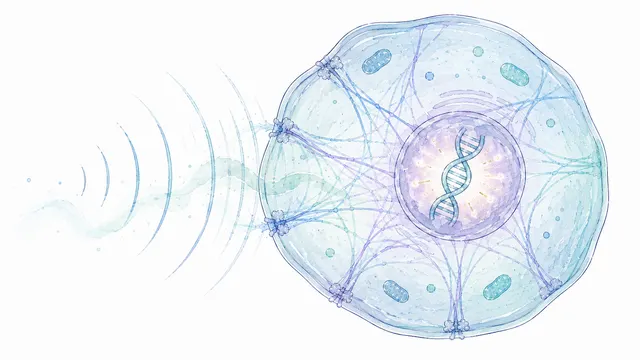
細胞はどこで音を受け取っているのか――細胞膜・接着部位・細胞骨格という“入り口”について前回は、細胞がただ音に反応しているだけでなく、周波数や音圧、波のかたちと…

細胞は
細胞は音に反応するのか――音を「耳で聴くもの」から、もう一度考え直してみる私たちはふつう、音を耳で聴くものだと考えています。音楽を楽しむ。声を聞き取る。物音に気…
Latest Articles
職人が
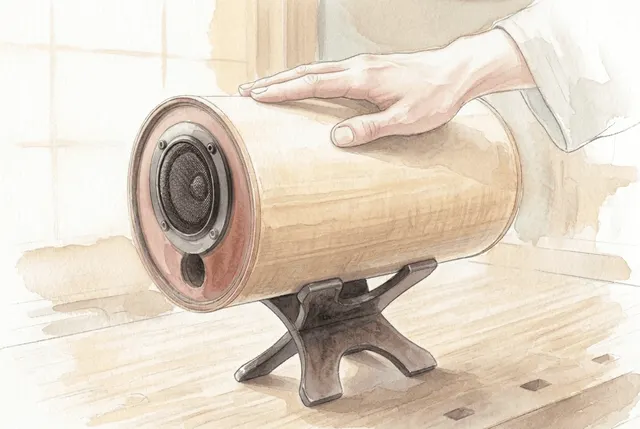
日本の職人が一台ずつ手作りしているスピーカーをお探しでしたら、エムズシステムの波動スピーカーがございます。スピーカーもアンプも、すべて日本製です。どの製品も、日…

テレビ朝日
このたび、テレビ朝日「じゅん散歩」の新富町散策の中で、エムズシステムにお立ち寄りいただきました。 放送予定は、2026年10月1日(木)10:10〜10:40で…

テレビの
テレビの声が聞き取りにくいのは、テレビのスピーカーの音は一方向へ進むため、聞く場所が正面から少し外れるだけで届きにくくなってしまうからです。エムズシステムがご提…
Catalog Request
Product catalogs, customer voices, media features & more. Request materials here.
Newsletter
New products, events & more. Stay up to date with our latest news. Subscribe here.
Book a Session
Reserve your listening session.
Contact Us
Products, maintenance, events & more. Get in touch with us. We'd love to hear from you.