
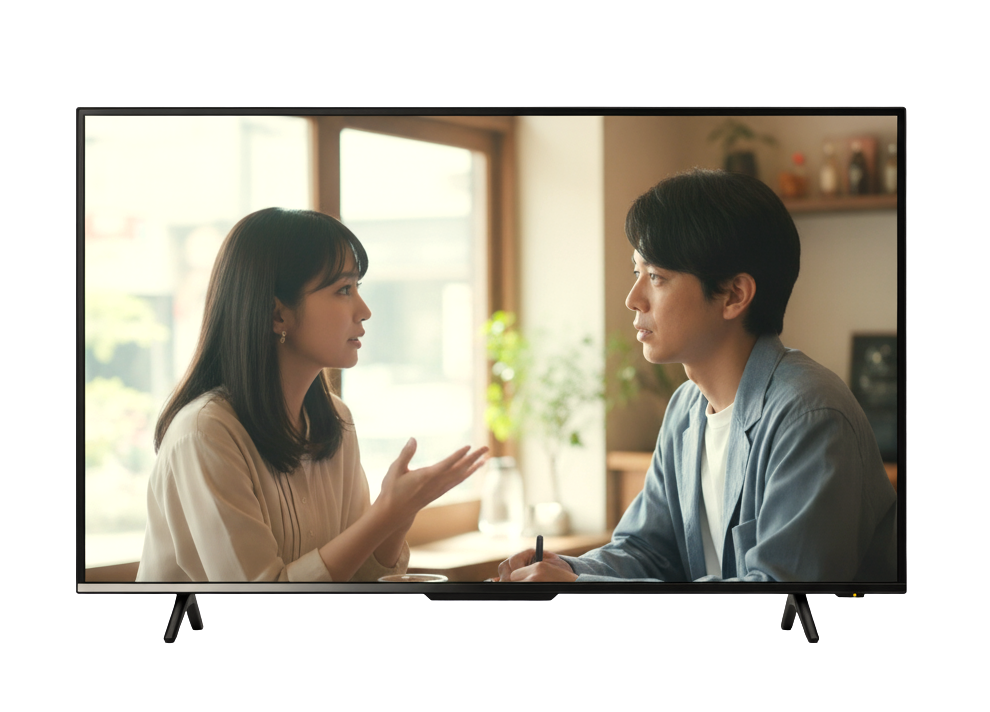
The era has finally arrived when the truth is ready to be revealed.
The term "AI hallucination" is becoming commonplace.
To the question "Why does TV sound feel noisy?"
the AI response is as follows.
*********************
AI Summary】
TV sound feeling noisy can be attributed to physical measures (volume adjustment, handheld speakers, earphones, subtitles, etc.) and physical or mental factors (fatigue, stress, etc.).
It's important to identify the cause and find methods that suit you.
If you are concerned about your physical condition, it's important not to overdo it and to find a method that suits you.
Physical Measures】
Checking and adjusting volume settings: Simply lowering the TV volume directly is the easiest solution.
Adjusting sound quality settings: Beyond volume settings, review "voice mode" or "sound quality settings (equalizer)" for bass and treble adjustments.
Use handheld speakers or wireless speakers.
You can listen near your ears without raising the TV's main volume.
Use earphones or headphones.
You can focus and listen without sound leakage to surroundings.
Display subtitles: By utilizing subtitles along with volume, you can supplement parts that are difficult to hear.
Measures for Physical and Mental Factors】
Reducing fatigue and stress: When fatigue and stress accumulate, sound processing may not work properly, making it feel noisy.
It's important to review lifestyle habits and take rest.
Others】
Discussion with family or housemates: If pointed out by family, try communicating your wishes such as "wanting to lower the volume" without becoming emotional.
**********************
Isn't this a wonderfully AI-like response?
The complete lack of human warmth seems a bit overdone.
What's completely missing from this AI answer is the perspective that TV sound feels noisy "because of the TV itself."
Perhaps out of mechanical solidarity, it skipped pointing that out.
While image evolution is certainly remarkable, the evolution of TV audio stopped dead about 30 years ago.
Cathode ray tube TVs (whether this term is still understood) were much better (?), but now small, highly directional, cheap speakers are built into the sides, bottom, or back, making them hard to hear, so unconsciously we turn up the volume, resulting in it "feeling noisy."
As physical solutions, it recommends using handheld speakers, wireless speakers, earphones, and headphones - recommending even more small, highly directional, cheap speakers is quite something.
However, AI is very honest and neutral, so after reading this blog content, its response content may change somewhat in the future.
Below is AI's explanation of AI hallucination.
It can properly analyze itself.
***********************
AI hallucination refers to the phenomenon where generative AI produces plausible but false information that differs from facts.
Originally meaning "hallucination," it's called this because AI outputs "plausible lies" as if seeing hallucinations.
Generative AI learns from vast amounts of data and generates sentences by predicting words with high probability of coming next.
This mechanism causes it to sometimes confidently answer with inaccurate information.
***********************
Another thing that's missing is "compassion."
Because it "feels noisy," people try to write it off as a matter of their physical condition, and are cornered by the thought that it is only such a small thing.
About half of Japanese people - 60 million - correct their vision with glasses or contacts, but only about 500,000 people correct their hearing (= use hearing aids).
Both vision and hearing decline with age, but because hearing decline is compensated with volume, doesn't this cause it to "feel noisy"?
While AI is very convenient, smart, and honest, it also has a dreamy (hallucinatory) personality, so we should approach AI with AI (love), surely.
Wave-motion speakers, born from a loving heart, may perhaps help to make TV audio that "feels noisy" easier to hear.
The answer is here ⇒ Easy TV Connection Set
TV Sound That Won't Tire Your Ears
Television built-in speakers are small and highly directional, which makes them hard to hear, so we unconsciously turn up the volume. M's system wave-motion speakers may perhaps help to make TV audio that "feels noisy" easier to hear. Our materials explain this in a clear and accessible way.
Start with our materials, at home and at your own pace. And when you visit Shintomicho, a listening session awaits.
Frequently Asked Questions
What is the main cause of television sound feeling unpleasantly loud?+
Has television audio technology advanced significantly in recent years?+
Does age-related hearing loss also contribute to the problem of 'the TV being too loud'?+
What solution does M's system propose for TV audio issues?+
More from our Blog
You may also be interested in
Latest in "CEO Blog"

Quiet Luxuryと
Quiet Luxuryとは何か Quiet Luxury(クワイエット・ラグジュアリー)とは、「見せびらかす豊かさ」から「感じ取る豊かさ」への転換を象徴する…
細胞は
細胞はどこで音を受け取っているのか――細胞膜・接着部位・細胞骨格という“入り口”について前回は、細胞がただ音に反応しているだけでなく、周波数や音圧、波のかたちと…

細胞は
細胞は音に反応するのか――音を「耳で聴くもの」から、もう一度考え直してみる私たちはふつう、音を耳で聴くものだと考えています。音楽を楽しむ。声を聞き取る。物音に気…
Latest Articles

テレビ朝日
このたび、テレビ朝日「じゅん散歩」の新富町散策の中で、エムズシステムにお立ち寄りいただきました。 放送予定は、2026年10月1日(木)10:10〜10:40で…

テレビの
テレビの声が聞き取りにくいのは、テレビのスピーカーの音は一方向へ進むため、聞く場所が正面から少し外れるだけで届きにくくなってしまうからです。エムズシステムがご提…

部屋の
部屋の音環境を整える最初の一歩は、音を足すことでも、消すことでもありません。いま部屋にある音が「どこから、どんなふうに」届いているかを知ることです。私たちが考え…
Catalog Request
Product catalogs, customer voices, media features & more. Request materials here.
Newsletter
New products, events & more. Stay up to date with our latest news. Subscribe here.
Book a Session
Reserve your listening session.
Contact Us
Products, maintenance, events & more. Get in touch with us. We'd love to hear from you.